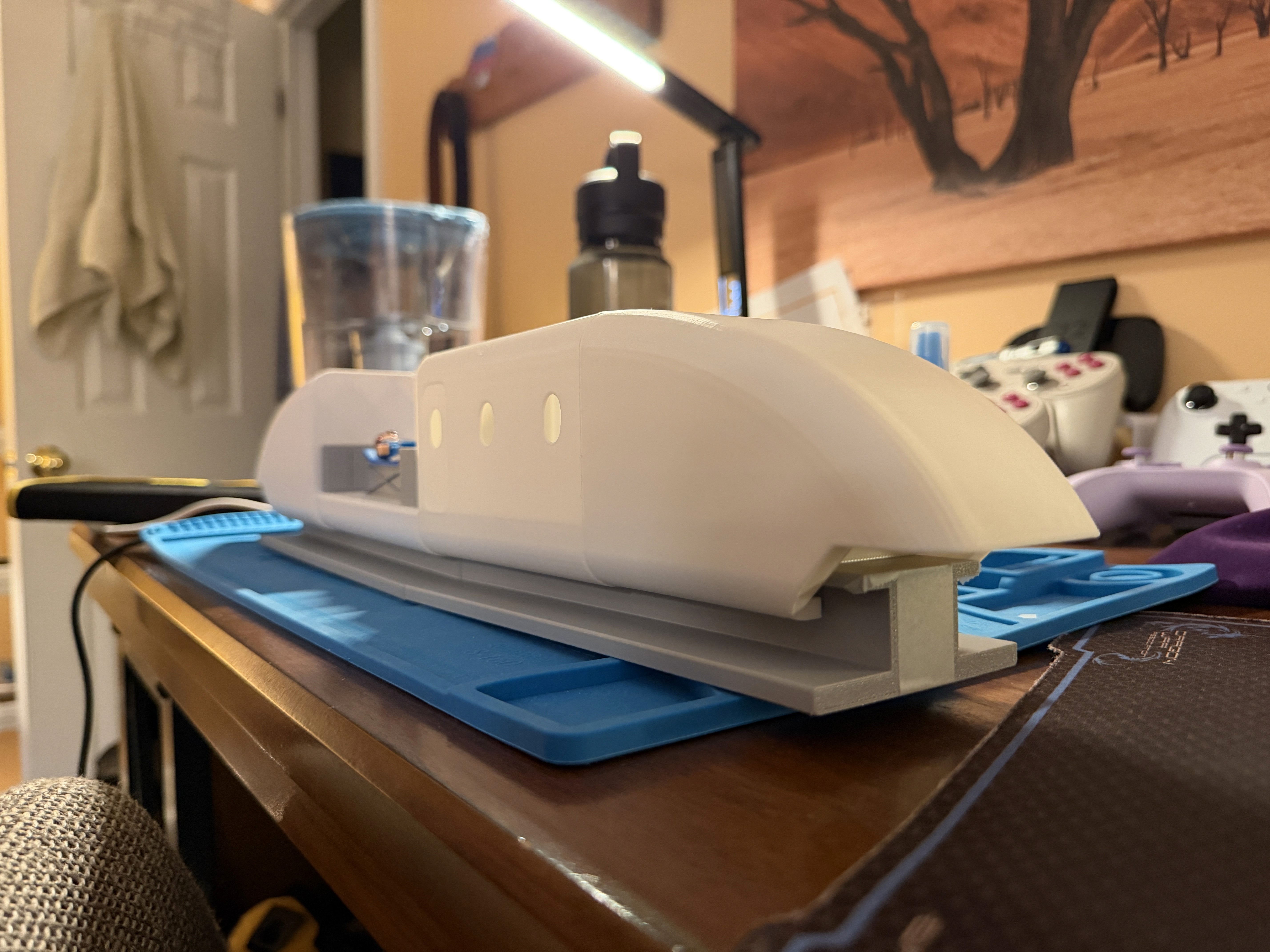
1st Place MDL CAD Designathon

OVERVIEW

- Yearly weekend long competition where teams use CAD to come up with a solution based off their category and present it to industry professionals. - This competition brings together students from different universities to test their 3D modelling, 3D printing, and technical presentation skills to the test. - The category we chose (Planetary Paramedics) was tasked to design a system that transports 10 medical patients over 40 km with obstacles of mountains, deserts, and plains. - For the full prompt: https://mcmasterdesignleague.notion.site/3-Planetary-Paramedics-2eb8084c8e7f81d298e2f30f974537b3
YEAR

Jan 17 - 18 2026

ROLE

Competitor

SERVICES

Solidworks
3D Modelling
3D Rendering
Assembly
Design for Additive Manufacturing (DFAM) / 3D printing
Systems Engineering
Technical presentations
Cross functional collaboration
Engineering analysis

About the project

How?

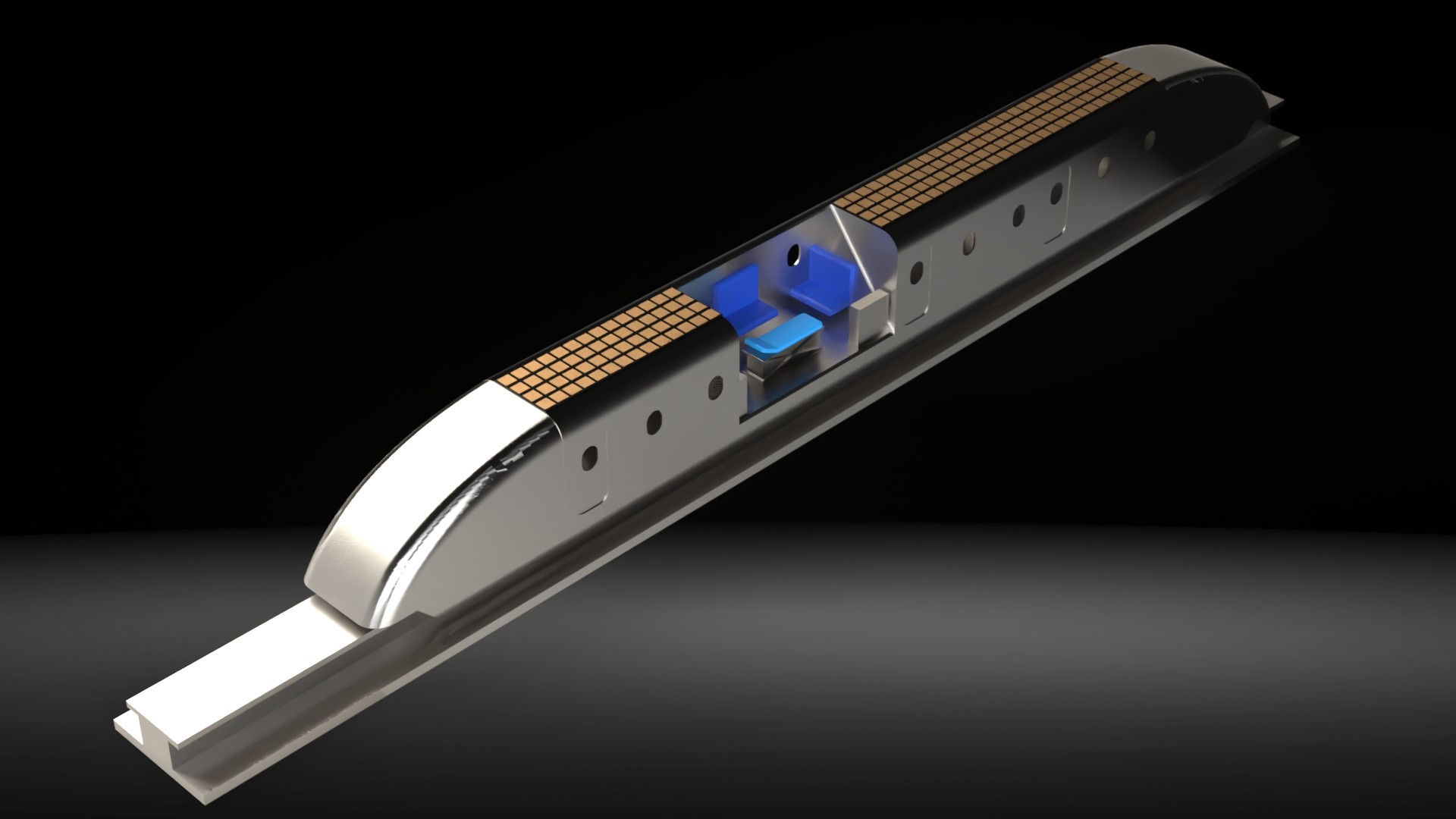
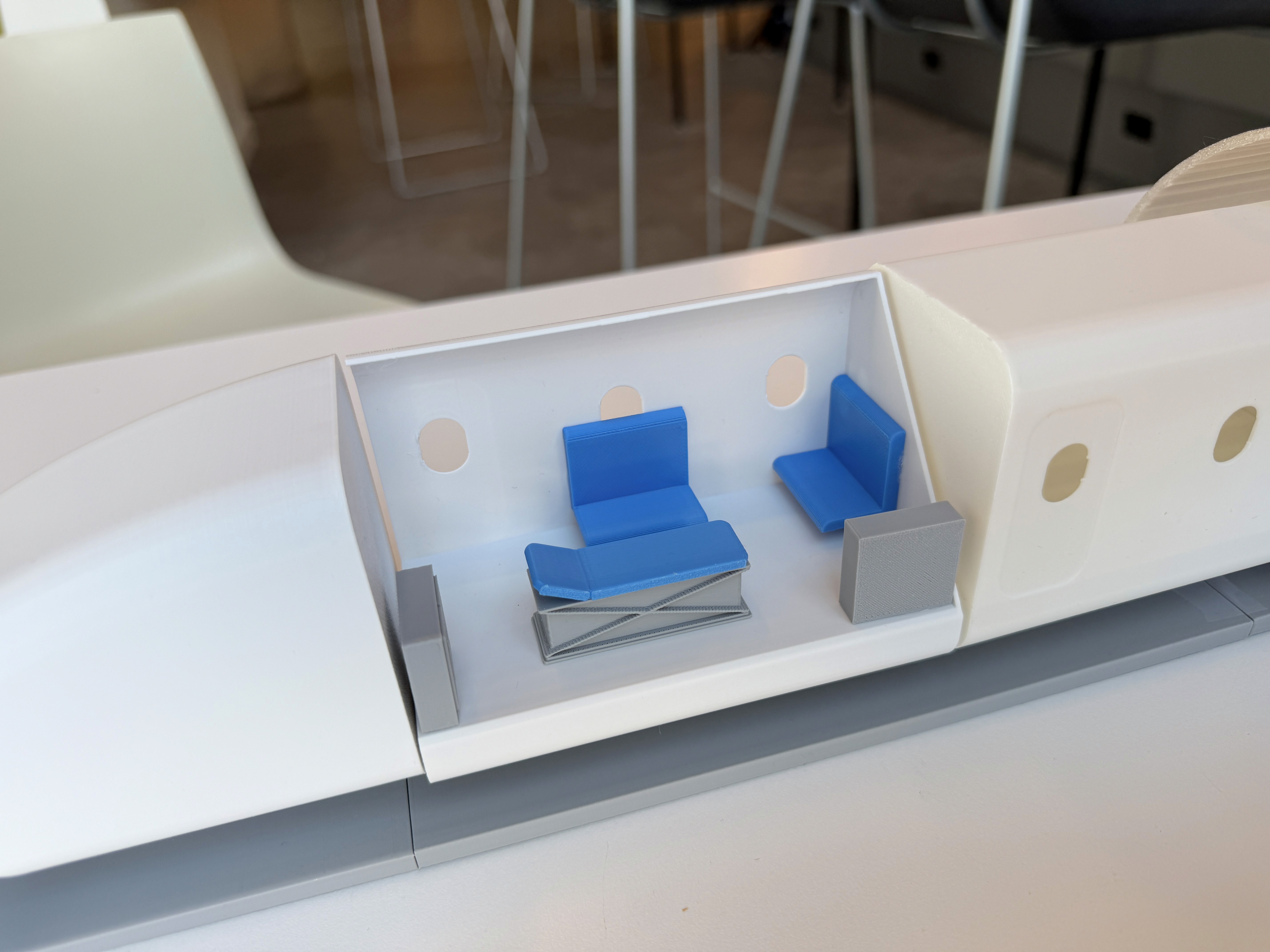
  • We used a train system that takes advantage of electromagnets for propulsion and levitation the train for a smooth and quiet ride experience. This system is called MagLev.

  • The advantage of MagLev over traditional train tracks are its high speed and reliability, eliminates the issue of a lower gravitational constant (affects grip to the rails), lower maintenance needed, as well as its ability to overcome the high air density.

  • To power this system, we are using a mixture of solar panels and wind turbines. The solar irradiance of this planet is around 2 times more powerful than Earth. It can easily provide electrical power to the train during the day cycle, but it can also overheat the train.

  • We implemented a protective tube system through the desert and across the plains. The tube enters underground where the ground acts like a huge heatsink for the heat generated from the rails and train which gets transferred to the ground.

  • We did an estimated cost breakdown with a total estimated cost of 3.4 billion CAD. This is a huge upfront cost but with little to no maintenance costs. The system is entirely renewable.

Results.

  • Strengthened our 3D modelling, rendering, and assembly skills in SolidWorks.

  • Improved our technical presentation skills.

LET'S GET IN TOUCH

chungr11@mcmaster.ca

Linkedin

+1-647-718-5233

3:58:21 AM

Smooth Scroll
This will hide itself!

1st Place MDL CAD Designathon

OVERVIEW

- Yearly weekend long competition where teams use CAD to come up with a solution based off their category and present it to industry professionals. - This competition brings together students from different universities to test their 3D modelling, 3D printing, and technical presentation skills to the test. - The category we chose (Planetary Paramedics) was tasked to design a system that transports 10 medical patients over 40 km with obstacles of mountains, deserts, and plains. - For the full prompt: https://mcmasterdesignleague.notion.site/3-Planetary-Paramedics-2eb8084c8e7f81d298e2f30f974537b3

YEAR

Jan 17 - 18 2026

ROLE

Competitor

SERVICES

Solidworks
3D Modelling
3D Rendering
Assembly
Design for Additive Manufacturing (DFAM) / 3D printing
Systems Engineering
Technical presentations
Cross functional collaboration
Engineering analysis

About the project

How?

  • We used a train system that takes advantage of electromagnets for propulsion and levitation the train for a smooth and quiet ride experience. This system is called MagLev.

  • The advantage of MagLev over traditional train tracks are its high speed and reliability, eliminates the issue of a lower gravitational constant (affects grip to the rails), lower maintenance needed, as well as its ability to overcome the high air density.

  • To power this system, we are using a mixture of solar panels and wind turbines. The solar irradiance of this planet is around 2 times more powerful than Earth. It can easily provide electrical power to the train during the day cycle, but it can also overheat the train.

  • We implemented a protective tube system through the desert and across the plains. The tube enters underground where the ground acts like a huge heatsink for the heat generated from the rails and train which gets transferred to the ground.

  • We did an estimated cost breakdown with a total estimated cost of 3.4 billion CAD. This is a huge upfront cost but with little to no maintenance costs. The system is entirely renewable.

Results.

  • Strengthened our 3D modelling, rendering, and assembly skills in SolidWorks.

  • Improved our technical presentation skills.

LET'S GET IN TOUCH

chungr11@mcmaster.ca

Linkedin

+1-647-718-5233

3:58:21 AM

Smooth Scroll
This will hide itself!

1st Place MDL CAD Designathon

OVERVIEW

- Yearly weekend long competition where teams use CAD to come up with a solution based off their category and present it to industry professionals. - This competition brings together students from different universities to test their 3D modelling, 3D printing, and technical presentation skills to the test. - The category we chose (Planetary Paramedics) was tasked to design a system that transports 10 medical patients over 40 km with obstacles of mountains, deserts, and plains. - For the full prompt: https://mcmasterdesignleague.notion.site/3-Planetary-Paramedics-2eb8084c8e7f81d298e2f30f974537b3
YEAR

Jan 17 - 18 2026

ROLE

Competitor

SERVICES

Solidworks
3D Modelling
3D Rendering
Assembly
Design for Additive Manufacturing (DFAM) / 3D printing
Systems Engineering
Technical presentations
Cross functional collaboration
Engineering analysis

About the project

How?

  • We used a train system that takes advantage of electromagnets for propulsion and levitation the train for a smooth and quiet ride experience. This system is called MagLev.

  • The advantage of MagLev over traditional train tracks are its high speed and reliability, eliminates the issue of a lower gravitational constant (affects grip to the rails), lower maintenance needed, as well as its ability to overcome the high air density.

  • To power this system, we are using a mixture of solar panels and wind turbines. The solar irradiance of this planet is around 2 times more powerful than Earth. It can easily provide electrical power to the train during the day cycle, but it can also overheat the train.

  • We implemented a protective tube system through the desert and across the plains. The tube enters underground where the ground acts like a huge heatsink for the heat generated from the rails and train which gets transferred to the ground.

  • We did an estimated cost breakdown with a total estimated cost of 3.4 billion CAD. This is a huge upfront cost but with little to no maintenance costs. The system is entirely renewable.

Results.

  • Strengthened our 3D modelling, rendering, and assembly skills in SolidWorks.

  • Improved our technical presentation skills.

LET'S GET IN TOUCH

chungr11@mcmaster.ca

Linkedin

+1-647-718-5233

3:58:21 AM

Smooth Scroll
This will hide itself!

Create a free website with Framer, the website builder loved by startups, designers and agencies.